

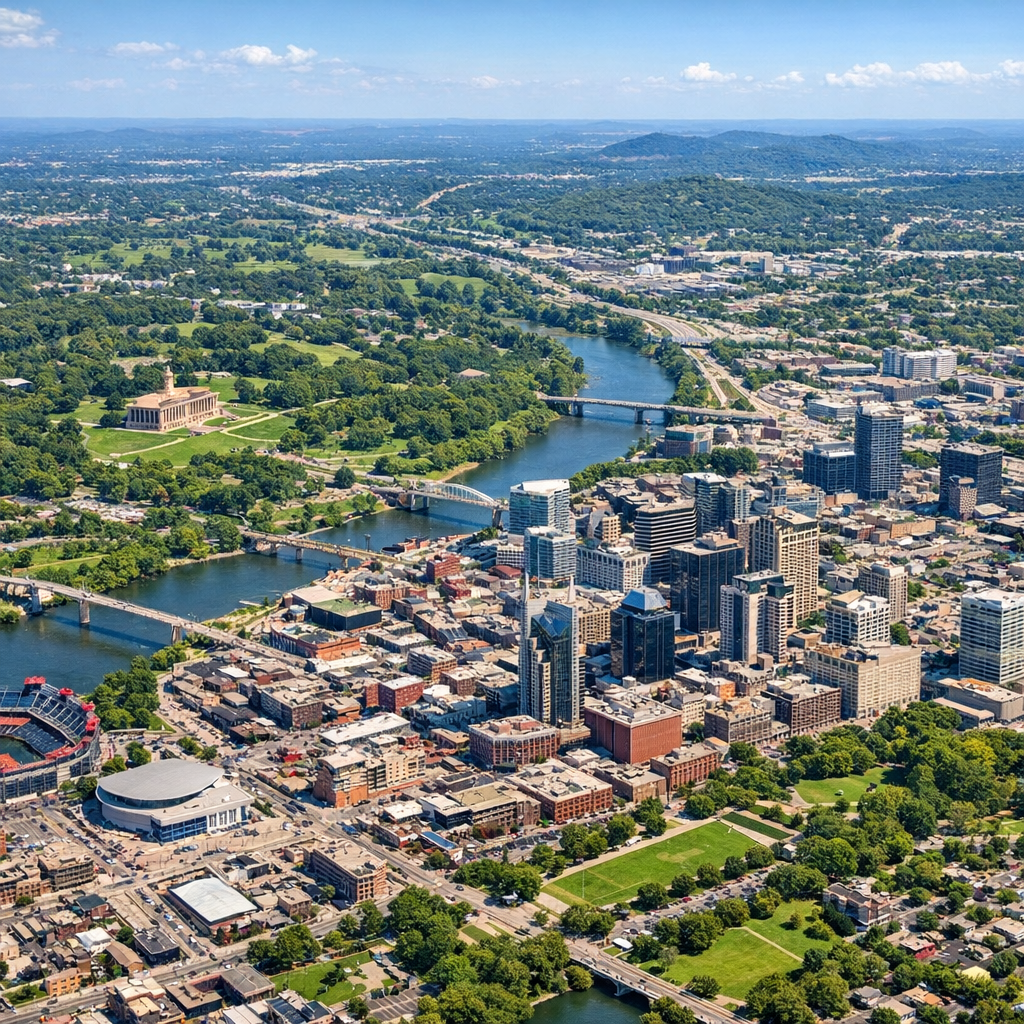
Nashville’s rapid urbanization has led to a phenomenon known as the Urban Heat Island (UHI) effect, where city areas experience higher temperatures than surrounding rural regions. This temperature disparity arises from factors such as extensive concrete surfaces, reduced vegetation, and concentrated human activities.
Causes of the Urban Heat Island Effect
Several elements contribute to the UHI effect in Nashville:
- Impermeable Surfaces: Materials like asphalt and concrete absorb and retain heat, elevating local temperatures.
- Reduced Green Spaces: Urban expansion often leads to the loss of trees and vegetation, which naturally cool the environment through shade and evapotranspiration.
- Human Activities: Vehicles, industrial operations, and air conditioning units emit heat, further warming the urban atmosphere.
Impacts on the Community
The UHI effect poses several challenges for Nashville residents:
- Health Risks: Elevated temperatures can exacerbate heat-related illnesses, particularly among vulnerable populations.
- Increased Energy Consumption: Higher temperatures lead to greater reliance on air conditioning, resulting in increased energy use and costs.
- Environmental Concerns: The UHI effect can worsen air quality and contribute to the formation of ground-level ozone.
Mitigation Strategies
To combat the UHI effect, Nashville can implement several strategies:
- Enhancing Urban Greenery: Planting trees and creating green spaces can provide shade and cool the air through evapotranspiration.
- Adopting Cool Roofing and Pavement: Utilizing materials that reflect more sunlight and absorb less heat can reduce surface temperatures.
- Promoting Sustainable Urban Planning: Designing urban areas with heat mitigation in mind, such as incorporating parks and green roofs, can help alleviate the UHI effect.
Community involvement is crucial in these efforts. Residents can participate in local tree-planting initiatives and advocate for policies that prioritize green infrastructure.
Conclusion
Addressing Nashville’s Urban Heat Island effect requires a collaborative approach, combining urban planning, community engagement, and sustainable practices to create a cooler, healthier city environment.