

By Emily Johnson
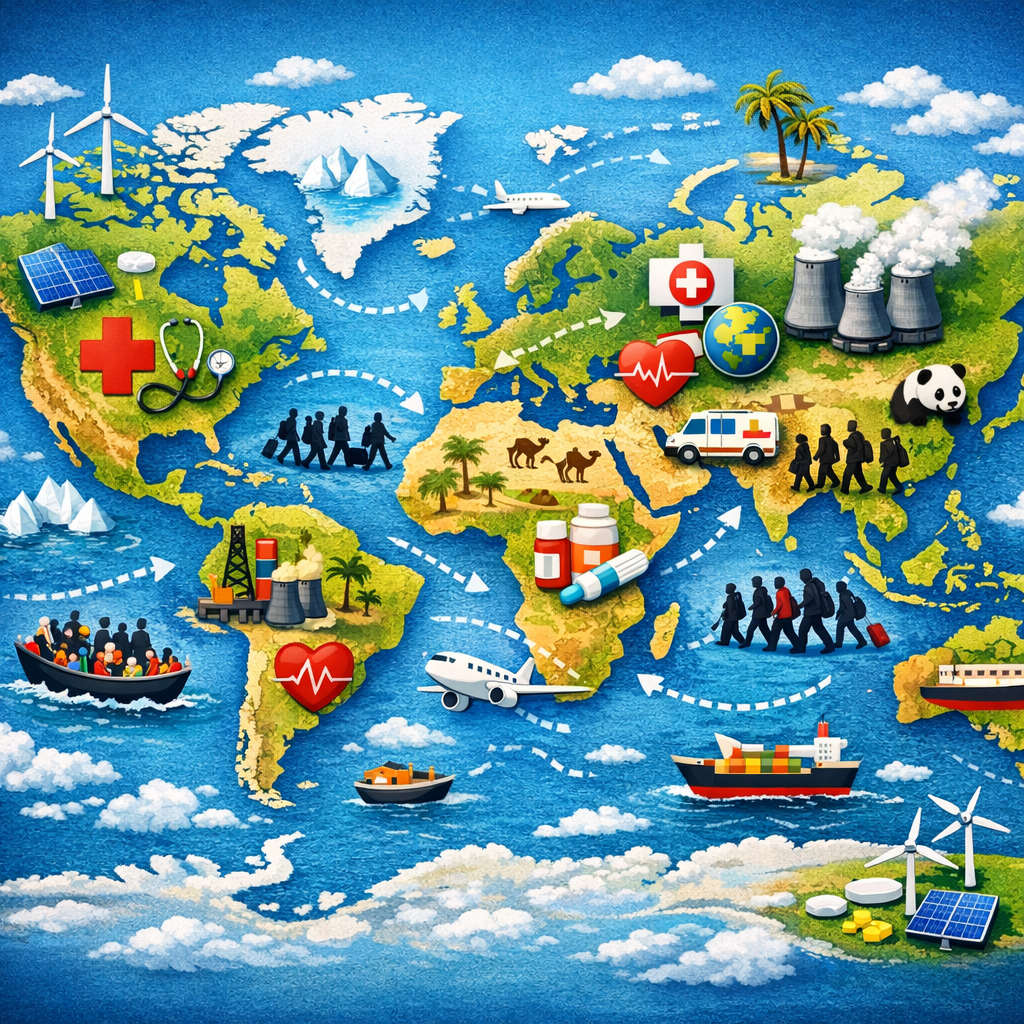
From local conversations over dinner tables to national policy debates, three big global trends are quietly shaping our lives in Nashville and beyond: the pressures on the energy transition, massive shifts in migration, and rising concerns over emerging diseases. I want to explore how they intersect, and why they matter to us — not just globally, but here at home.
1. Energy in Transition — Progress Meets Fragmentation
The world is investing heavily in cleaner energy—renewables and nuclear power have grown fast, accounting for nearly half of global electricity in recent reports. Yet despite these gains, many countries are struggling to balance sustainability, affordability, and reliability. The foundations that make future progress possible—like stable policy, financing, innovation and infrastructure—are under strain.
A recent study shows only about a quarter of countries are advancing across all three dimensions at once. Problems like grid bottlenecks, export limits on critical minerals, and disrupted energy flows (because of geopolitical tensions) are all exposing how fragile our supply chains and energy systems really are.
2. Migration and Displacement — Global Numbers, Local Impacts
Worldwide, over 300 million international migrants were recorded by mid-2024. That alone hints at the scale of cross-border movement. But what stands out even more is the rising number of people displaced within their own countries—over 80 million. Many flee conflict, climate disasters or economic hardship.
Labor migration continues to dominate much of that international flow. And as more people move (voluntarily or not), we’re seeing increased attention to the health, social and policy needs of migrant and displaced populations. Access to health care, housing, work rights, and social services becomes especially urgent both for migrants and host communities.
3. Health Threats on the Rise — The Urgency of Preparedness
Emerging and re-emerging infectious diseases are no longer distant concerns. Climate change, land-use changes, wildlife trade, urbanization, and globalization are creating more opportunities for pathogens to spill over from animals to people. We face serious risks from highly pathogenic flu strains, novel coronaviruses, and vector-borne illnesses like dengue, chikungunya, and Zika.
Global health experts emphasize the “One Health” approach—recognizing the interconnectedness of human, animal, and environmental health—as essential for detecting and stopping outbreaks early. It’s not just about preventing pandemics; it’s about assuring basic health resilience everywhere.
4. Why It Matters in Nashville
Yes, we’re far from many frontline zones, but the tremors reach us. Energy supply and prices are shaped by international dynamics, so shocks abroad can affect everything from gasoline to utility bills. Migration trends influence our communities: immigrant health and social services, schools, housing, and cultural connections are all part of the story. Health threats don’t respect boundaries—viruses or weather patterns emerging overseas can reach us, especially in a world ever more connected by travel.
5. What We Can Do Together
- Support clear policy and investment at multiple levels. Whether local, state, or national, reliable regulation and funding make a huge difference for energy projects, health infrastructure, and migration policy.
- Strengthen surveillance and preventive health systems. Communities, clinics, and local governments play key roles in tracking outbreaks, enabling early response before small problems become major ones.
- Promote inclusion and equity. Migrants, displaced people, and rural or marginalized communities often bear the brunt of these global trends. Ensuring fair access to services and decision-making boosts collective resilience.
- Foster community education and engagement. Understanding risk—energy supply issues, migration impacts, disease threats—helps people make informed choices and build support for wise policy choices.
These global shifts are happening now. We in Nashville may not always lead the headlines, but we are part of the ripple—or the wave. Paying attention, acting locally, and demanding smart leadership can help us weather change, rather than be overcome by it. Global interconnection means what’s happening elsewhere can shape us—let’s make sure we’re ready.