

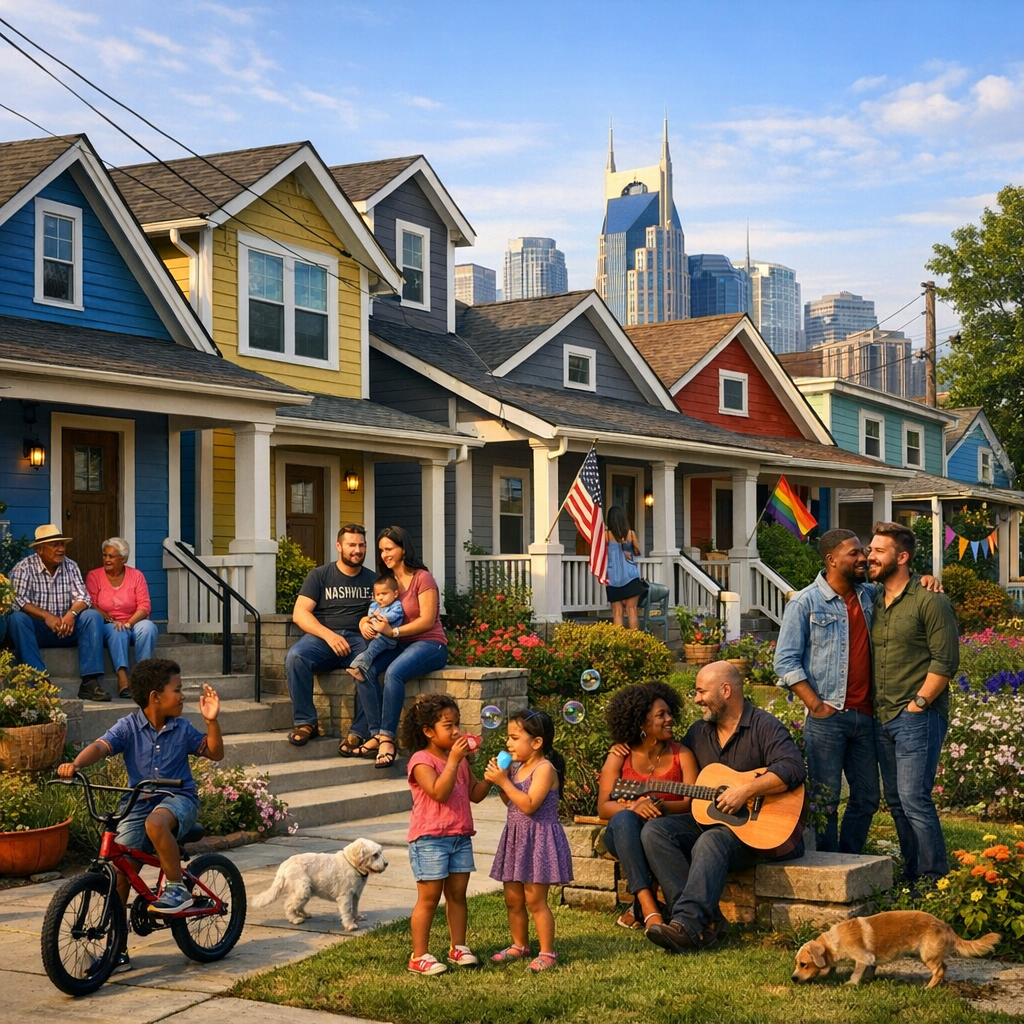
Every time I drive through my neighborhood and see a “For Sale” sign on a house for double what it sold for just a few years ago, I feel that tension—pride in the growth, yes, but also fear that this place I call home may soon be out of reach.
When Growth Becomes Challenge
Nashville’s push to expand and modernize has brought investments in infrastructure, culture, and public spaces. But alongside that, many Nashvillians are facing a housing crisis. According to a recent poll, more than 80% of residents say they cannot afford to buy a home in the city—even if they already live here. Though salaries have in some cases risen, home prices and rents have climbed faster. These trends aren’t just numbers—they’re showing up in the day-to-day lives of people at work, at school, in the community.
Barriers That Stick Around
I’ve talked with folks who’ve been turned away for a lease because of a past eviction they couldn’t pay, or locked out due to a criminal record—even when they’ve rebuilt trust and steady income. I’ve seen young people graduating college, excited to stay, but finding the rental market already locked tight. And for many, the idea of owning just isn’t possible without extreme sacrifice.
The Metro Nashville Unified Housing Strategy aims to change that by setting clear actions to expand access to safe, stable, affordable housing. It’s the sort of policy that could make a difference when it sticks—not just another plan on paper. Community engagement is central: people speaking up about their lived experience are helping shape what affordability looks like in real neighborhoods.
Holding Onto Community Roots
Because housing isn’t just shelter—it’s community. It’s schools where friends are made. Local businesses that know your order. Streets that hold memories. For long-time residents, price pressures aren’t just financial; they erode the connections that give us identity and solidity.
Nonprofits, local leaders, and neighbors are stepping in. Programs that preserve mixed-income neighborhoods, provide rental assistance, subsidize renovations so older homes stay liveable rather than replaced, and efforts to increase affordable housing stock all matter. Some families are sharing housing; others are staying put by budgeting every unexpected expense. That old porch is peeling; the paint is faded—but until there’s a viable path to relocate without breaking, we stay.
If We Look Ahead—Together
As Nashville grows, one question stands out: who gets to benefit from that growth? We need development that lifts everyone—not just part of the skyline.
For that to happen, these pieces can’t be optional: inclusive zoning that allows more housing types; funding for affordable housing that doesn’t disappear in political upheaval; support services that help people who’ve been excluded by past evictions, incomes that don’t match inflation, or situations beyond their control. And community voices—neighbors, renters, small-business owners—must be at the table from the start.
If we fail, what’s at risk is more than homes—we lose roots, culture, homegrown character. But if we succeed? Nashville can be a city we all feel proud to stay in.