

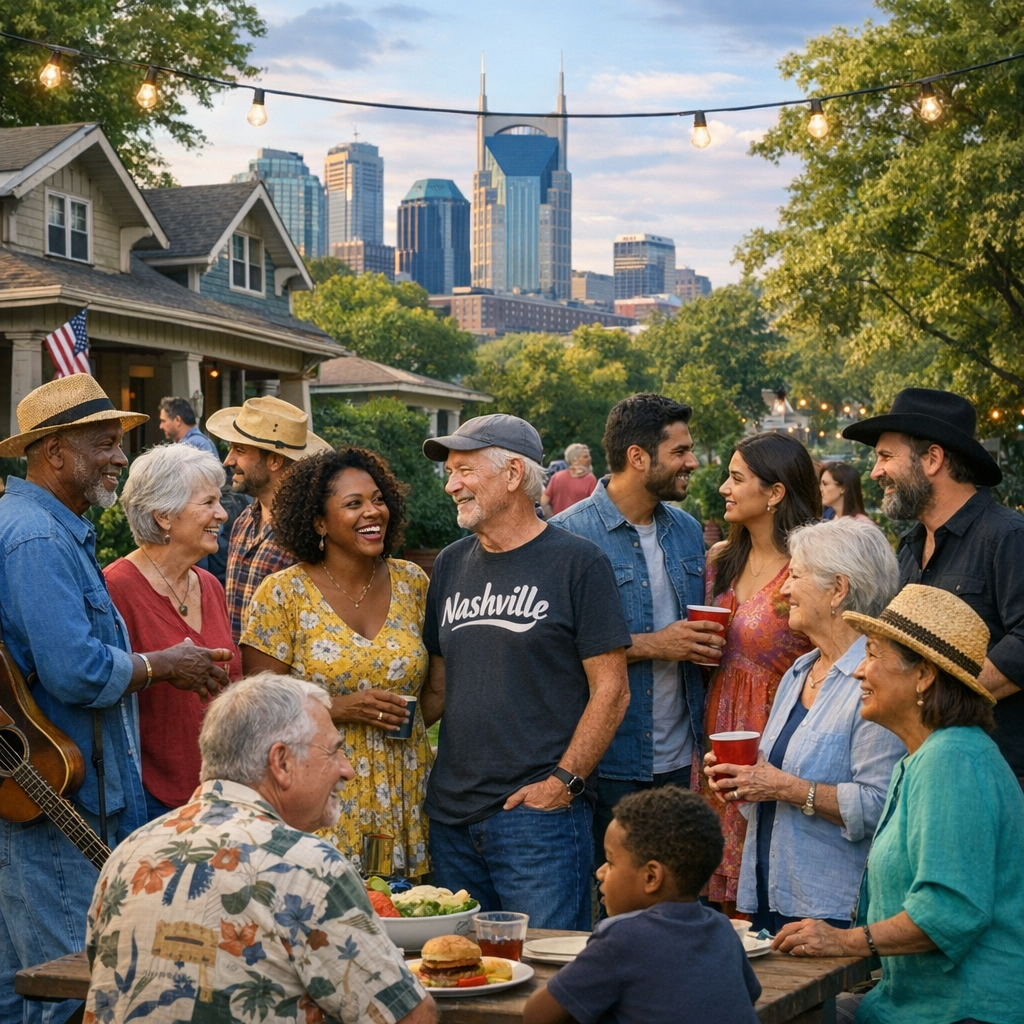
My name is Benjamin Lopez, and I’ve lived in Nashville long enough to remember bus rides that skipped across town and corner stores where everybody waved as you passed. I’ve also seen how much this city is changing—along with who gets to call it home. I want to share some stories and reflections from folks in our neighborhoods, so we can think together about what belonging really means here.
When the street you grew up on becomes unfamiliar
Take Edgehill and its west side, for example. Once known for its strong Black community—doctors, artists, families—it’s now seeing new faces, new restaurants, new apartments. But for many long-time residents, that comes with fear: of rising rents, of corner shops being replaced, of neighbors moving away. Some see nostalgia; others, loss. It’s not just about architecture or night markets—it’s about whether folks feel like there’s still room for them. cite
Belonging isn’t just about location—it’s about inclusion
“I feel like I belong when I can afford to fix the roof, leave the lights on, be seen in my community,” one resident shared recently during a neighborhood meeting. That strand of belonging—financial—runs through many conversations I’ve listened to. According to a recent survey, 72% of Nashvillians believe there’s a growing divide between rich and poor, and many feel the city’s amenities aren’t shared equally. cite
What people say makes Nashville worth staying
- Green spaces, parks, places to play and gather—these feel non-negotiable. They’re what people point to when they say, “this is home.”
- Strong neighborhood ties: knowing your neighbor, local businesses you frequent, a corner where you always stop. These stitches hold communities together.
- Fair, comfortable housing—homes you can afford, neighborhoods that don’t price out those who have been there long.
- Access to good transit, safe streets, sidewalks that let you walk without fear. Things you use every day, often without thinking about it.
Why some Nashvillians feel left behind
Rapid growth in Nashville—new condos, bigger roads, booming downtown—has a cost. For many, that cost shows up in rising cost of housing, longer commutes, changes in local businesses, and a question of whether the city remembers the people who built their neighborhoods. cite
For example, areas near “all-access corridors” see a lot of transit investment—but living close to those corridors is already expensive, putting the benefits out of reach. cite
So what would help us rebuild belonging?
I believe a few things could make a real difference. One: policies that protect long-time residents—rent support, tax freezes, mixed-income housing. Two: processes that include folks who’ve often been excluded from decision-making: low-income households, people without college degrees, older Nashvillians. Three: investing in neighborhoods outside the shiny new ones—making sure roads, transit, parks, schools aren’t left behind in corners of the city that don’t show up in glossy developer pitches.
That sense of belonging isn’t just soft and vague—it’s what keeps people rooted. It means homes, not just houses; neighborhoods, not just zip codes; shared futures, not just headlines.
I’ve heard stories across Nashville—of people stretched thin but still hoping, of strong roots amid change, of voices that refuse to be quiet. If we listen, and act, we can shape a city where belonging isn’t rare: it’s common.