

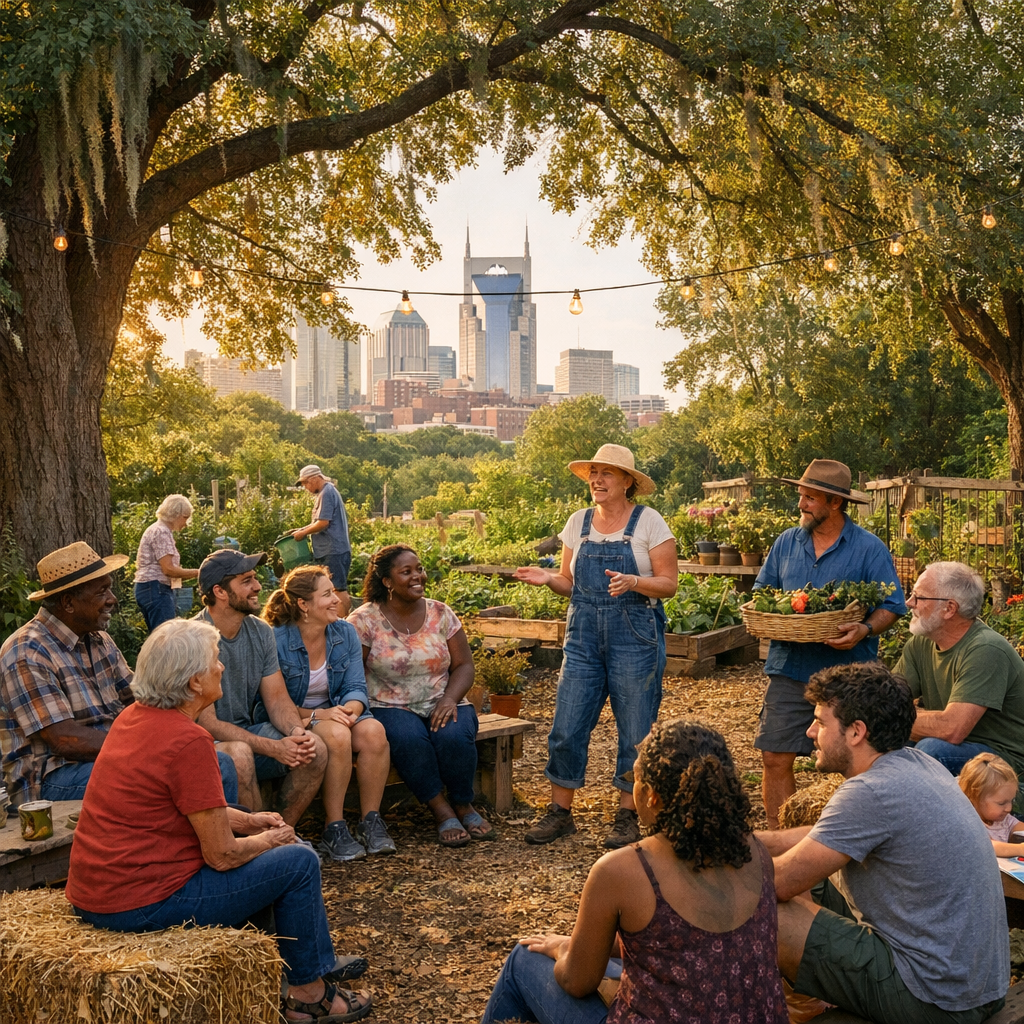
My name is Benjamin Lopez, and I’ve dug my hands into Nashville’s soil—literally—because I believe community gardens are more than pretty patches of green. They’re safe places for growth—of food, friendships, and belonging.
The Power of Shared Soil
Nashville is growing fast. New roads go in. Old trees come down. Local businesses vanish under pressure from development. In this shifting landscape, community gardens like Be Well Community Garden at Edmondson Pike Library offer something rare: stability. Here, students from Antioch High School plant, volunteer, and breathe together under a canopy of leaves—not traffic lights. In that garden, people find peace in the mundane act of planting. Connection in the rhythm of seasons. Hope when the world outside feels chaotic. These places aren’t just about food—they remind us who we are.
Gardens at Risk When Bureaucracy Doesn’t Speak the Language of Care
Take COVID Park in South Nashville—a garden born in 2020, grown by neighbors, tended by many. It became part classroom, part gathering spot, part haven. But in early 2026, Metro employees showed up, padlocked the tool storage, dismantled water systems—without notice, without hearing from the people who rely on that garden every morning. That corner of earth became a symbol of how well-meaning governance can fail when it forgets that land means relationships.
Gardens as Bridges Between Generations and Cultures
Nashville Food Project’s Community Agriculture Network spreads this work across many neighborhoods—growing food, yes, but also restoring green spaces, nurturing traditions for people new to this land, and helping immigrant families teach their children the language of soil. From McGruder in North Nashville to Mill Ridge in Antioch, gardens create openness. When kids learn to plant tomatoes from seeds or water their own plots, they also learn patience, responsibility, and trust in something beyond themselves—a seed that becomes food.
What’s Needed for Gardens to Thrive—and for Nashville to Grow Fairly
If I’ve learned anything walking paths between tomatoes and lettuces, it’s this:
- Consistent Oversight: If Metro departments must regulate garden space, they should establish clear, transparent channels so that neighbors know ahead of time what to expect.
- Secure Land Rights: Gardens need secure tenure—leases or legal protections—so that what people put their energy into isn’t suddenly taken away.
- Resource Parity: Equipment, water access, compost, seeds—these all cost money. When garden programs include low-income and immigrant families, we need to meet them where they are.
- Value Everywhere: Gardens aren’t just for beautification or tourism—they’re for the health of every community. Policy needs to reflect that: more garden space in every ZIP code, especially those historically overlooked.
Final Thoughts
Gardens in Nashville are kind of like storytelling—silent stories told in leaves and soil, seasons and shadows. They reveal who we are, what we value. And when a garden is uprooted without care, we lose more than plants. We lose trust. We lose grounding. We lose a bit of ourselves.
If Nashville continues to grow—and we should be so lucky—it has to do so in ways that honor every gardener, every child who touches soil for the first time, every neighborhood whose voice hasn’t always been heard. Because when community gardens flourish, so can we all.