

By Sophia Anderson
As Nashville continues growing, many of the city’s ongoing efforts in infrastructure, transit, and urban planning are coming into sharper focus. Here’s what residents need to know about current projects and what they’ll mean for neighborhoods across Davidson County.
Choose How You Move: Transportation Investments in Motion
The voter-approved Choose How You Move (CHYM) program is delivering more than just promises. With its $3.1 billion investment, the initiative is updating traffic signals, expanding bus service, adding sidewalks, and rolling out Complete Streets designed to work well for people walking, biking, rolling, or using transit.
Recent funding — roughly $100 million — supports transit center expansion (including one in Donelson), smart-signal upgrades, and infrastructure that improves safety and accessibility.
Along major corridors like Gallatin Pike and Nolensville Pike, long-planned All-Access Corridors are evolving: lowering transit delays, creating safer crossings, and enhancing multimodal connections.
Bridge Work on I-40 Over 8th Avenue
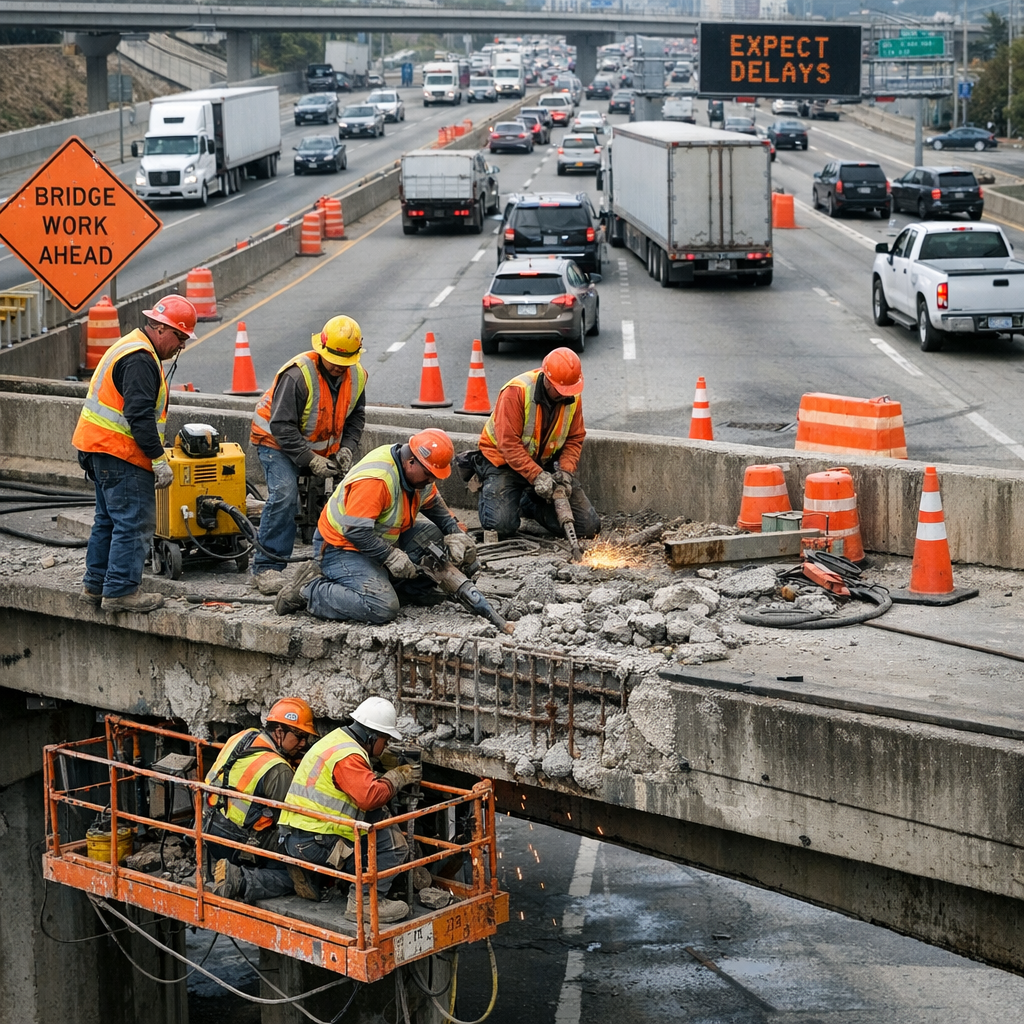
One of the critical moves in Nashville’s infrastructure landscape is underway: replacing four bridges at the I-40 overpass at 8th Avenue, including both directions of I-40 and connecting ramps. These bridges have reached the end of their usable life.
Using Accelerated Bridge Construction methods helps reduce traffic disruptions. While the footprint stays mostly the same, the project will require approximately two more years, with substantial completion aimed for summer 2028.
Upgrading Urban Core Design and Zoning
Nashville’s Design & Development Strategy (D&DS) is underway, aimed at updating how zoning, building codes, and development policies guide growth in downtown, Midtown, East Bank, Music Row, and surrounding areas.
Because several existing plans are now ten years old or more, D&DS team members are re-examining how public benefit incentives, building heights, and design guidelines could be modernized to better reflect current infrastructure, housing, and transit realities.
Water, Sewers, and Clean Water Nashville
It isn’t all roads and rail: Clean Water Nashville is moving forward with major sewer and rehabilitation work in places like Mill Creek, Collins Creek, and Shelby Park. The goal is to renew aging sewer lines and reduce the risk of overflow during rainfall and storms.
What This Means for Nashvillians
• Commutes in heavy-traffic zones could improve as signals get smarter and bus service becomes more reliable.
• Neighborhoods hit by bridge repairs or transit construction may face temporary impacts — detours, noise, or changes in access.
• Developers, property owners, and renters should expect shifts in zoning or building codes in urban core districts; engagement opportunities are coming.
• Stormwater and sewer upgrades mean better protection from flooding and environmental damage in vulnerable areas.
These projects — part of a connected effort of transportation, growth management, and infrastructure renewal — reflect Nashville’s effort to balance rapid growth with livability, safety, and equitable access. For many residents, the changes are already starting to change how the city feels and moves.