

By Benjamin Lopez
Public Input Is Not Just a Box to Check
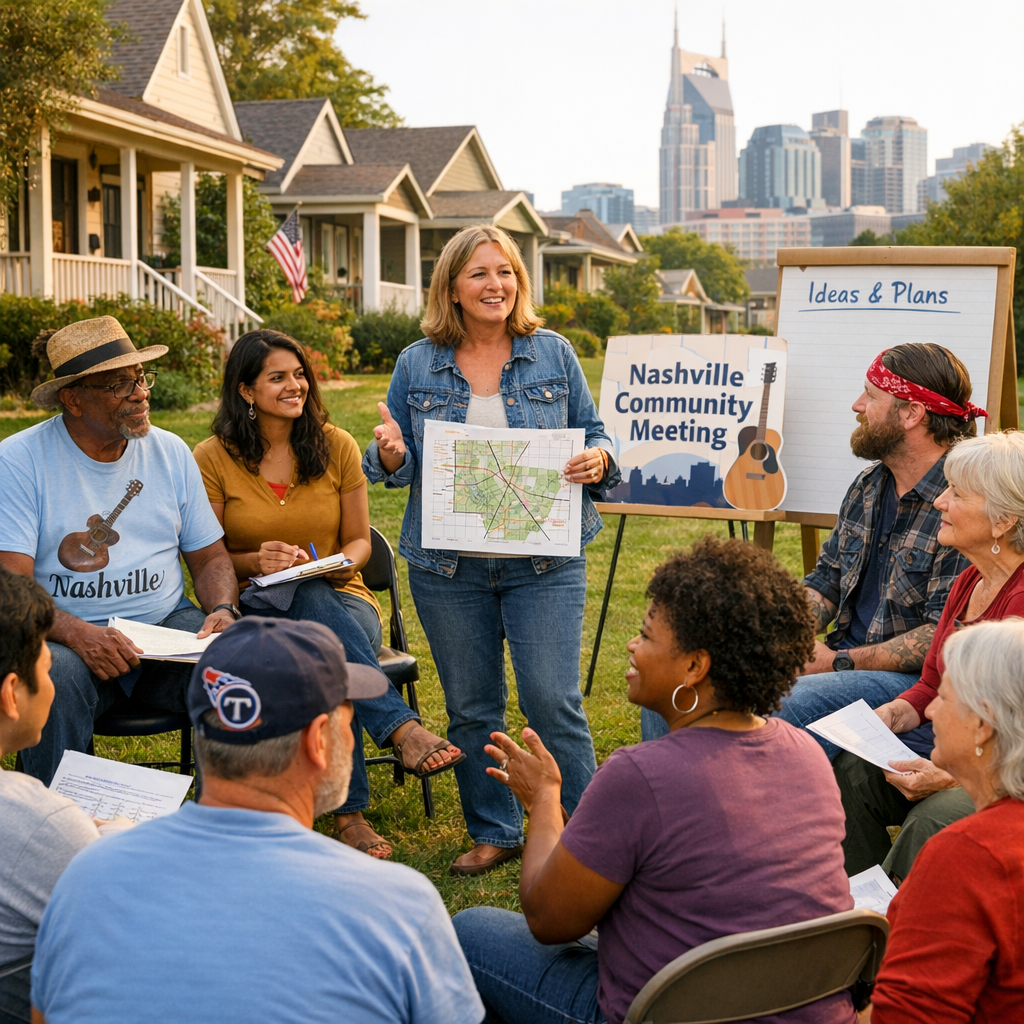
In Nashville, we often hear talk of “community engagement” or “public input.” But too often, these phrases are used loosely—without real listening. Genuine input is more than gathering signatures or holding open houses—it’s meaningful participation in shaping what our neighborhoods become.
Art, Infrastructure, and Everyday Life
Take public art. Nashville’s public art program, managed by Metro Arts, includes over 200 permanent works across public spaces—from libraries and parks to transit corridors. These artworks are not random decorations: many are developed with community input at every stage, honoring local stories and helping shape a place that residents feel proud of. Public art here strengthens cultural identity and gives visual expression to our values.
For example, the “Arthur Avenue Underpass” project in North Nashville engaged over 300 residents who wanted safer crossings, slower traffic, and lighting that feels welcoming—not harsh. The result is a canopy of LED light that moves and glows with a purpose: one of healing, beauty, and memory.
When people speak, and those voices guide design, our public spaces feel like ours. Without that, we risk sterile, imposed designs that alienate rather than unite.
Honoring Local Values Across Plans
Nashville’s “Public Art Community Investment Plan” insists on equity, public participation, and neighborly visions. The Metro government’s arts guidelines also require inclusive planning, outreach, and impact assessments when awarding grants or approving projects. These policies matter—they’re the structural support our creativity and community can lean on.
Similarly, groups like Save Our Nashville Neighborhoods (SONN) advocate for shaping housing and zoning policies in ways that protect affordability and character—especially for long-time residents and working families. That kind of advocacy keeps planning grounded in lived experiences, not just financial models or aesthetics.
The Cost of Silence
When voices are excluded, the consequences are real. Spaces feel imposed, disconnected. Traditional or marginalized communities lose notice. Art becomes decoration instead of meaning. Zoning decisions may benefit developers but drive out neighbors. In short: exclusion erodes trust.
How We Can Keep Raising Our Voices
- Attend public meetings. Show up, ask questions, share stories.
- Encourage local artists, planners, leaders to collaborate with neighbors early—before designs or policies are locked in.
- Support nonprofits and coalitions that bring residents into decision-making—not just public hearings, but governance.
- Vote for officials who prioritize public engagement and who have a track record of listening.
Why It Matters Long After the Ribbon Cutting
Spaces, policies, and murals born of community voice endure—because they feel like home. They sustain belonging, and they foster pride. When we know we had a say, we’re more invested in upkeep, protection, and celebration. Neighborhoods don’t just get built—they grow together, shaped by neighbors who believe their voice and story matter.